How Many Keywords for SEO? 7 Powerful Rules (2026)

Quick Answer
If you are wondering how many keywords for seo, the ideal approach in 2026 is to use one primary keyword, three to five secondary keywords, and several related terms. This helps search engines understand your content naturally without keyword stuffing. Instead of repeating the same keyword, focus on intent, readability, and structure. A balanced keyword strategy improves rankings, especially in competitive markets like Texas.
Table of Contents
What Keywords Mean in SEO
The number of keywords you use depends on your content length and purpose, but a structured approach works best. For a standard blog post of 2000 words, using 10–15 keywords naturally is ideal. This includes one main keyword and supporting keywords that expand the topic. Instead of forcing keywords into every sentence, you should place them where they fit naturally. This helps maintain readability while still optimizing your content for search engines and AI-driven results.
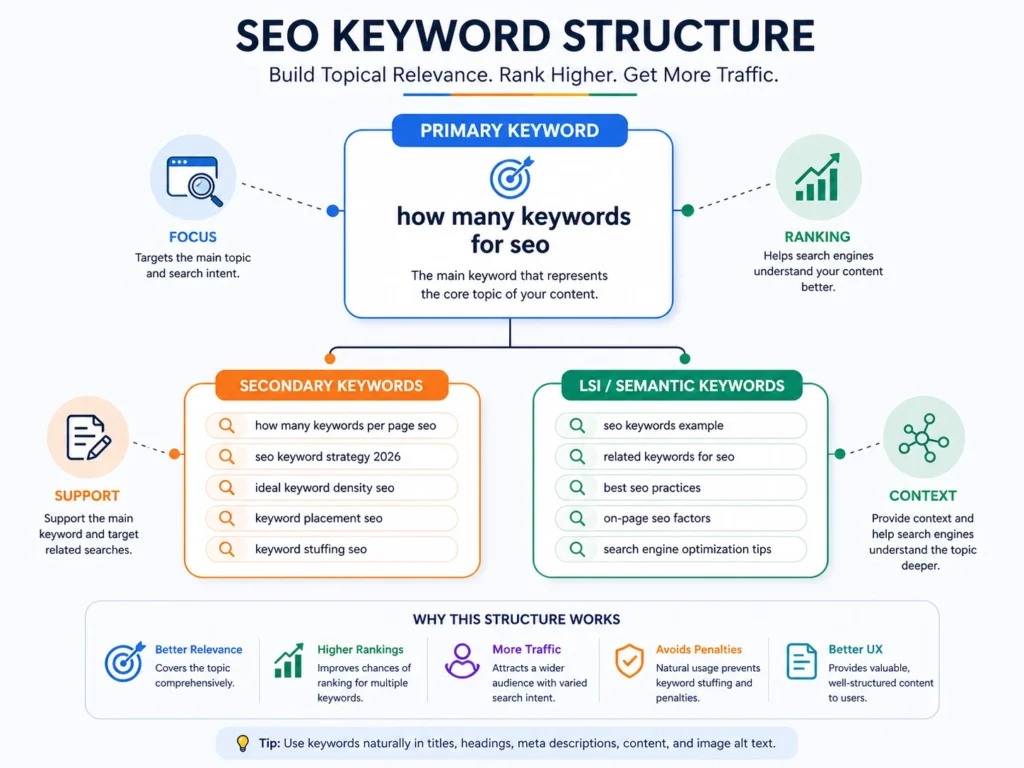
How Many Keywords Per Page seo should be used?

The number of keywords you use depends on your content length and purpose, but a structured approach works best. For a standard blog post of 2000 words, using 10–15 keywords naturally is ideal. This includes one main keyword and supporting keywords that expand the topic. Instead of forcing keywords into every sentence, you should place them where they fit naturally. This helps maintain readability while still optimizing your content for search engines and AI-driven results.
Recommended Keyword Structure
- 1 Primary Keyword
- 3–5 Secondary Keywords
- 5–10 LSI Keywords
Types of Keywords Explained
Understanding keyword types is essential for building a strong SEO strategy. The primary keyword is your main topic and should appear in key places like the title and first paragraph. Secondary keywords support the main keyword and target variations of the search query. LSI keywords add context and help search engines better understand your content. By combining these keyword types, you create a more complete and effective SEO strategy that improves your chances of ranking higher
Ideal Keyword Density in 2026
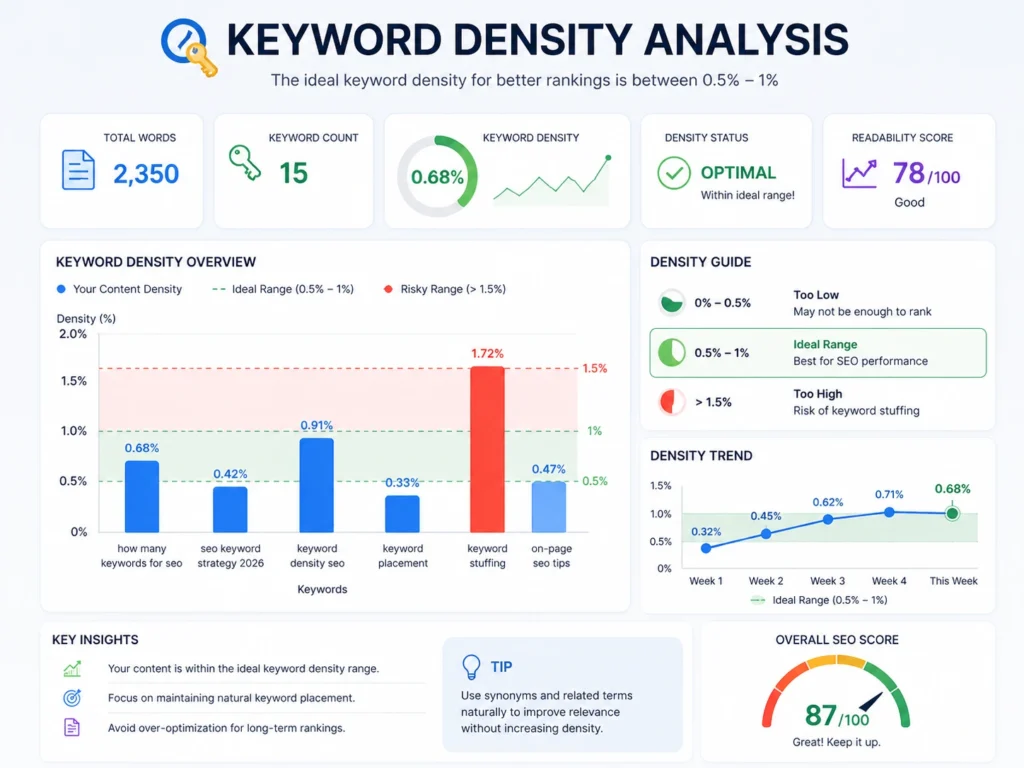
Keyword density refers to how often your keyword appears in your content compared to the total word count. In modern SEO, the ideal keyword density is between 0.5% and 1%. This ensures that your content remains natural and easy to read. Overusing keywords can lead to penalties and lower rankings. Instead of focusing on exact numbers, you should focus on writing high-quality content where keywords are used naturally and meaningfully.
Real Example with Data
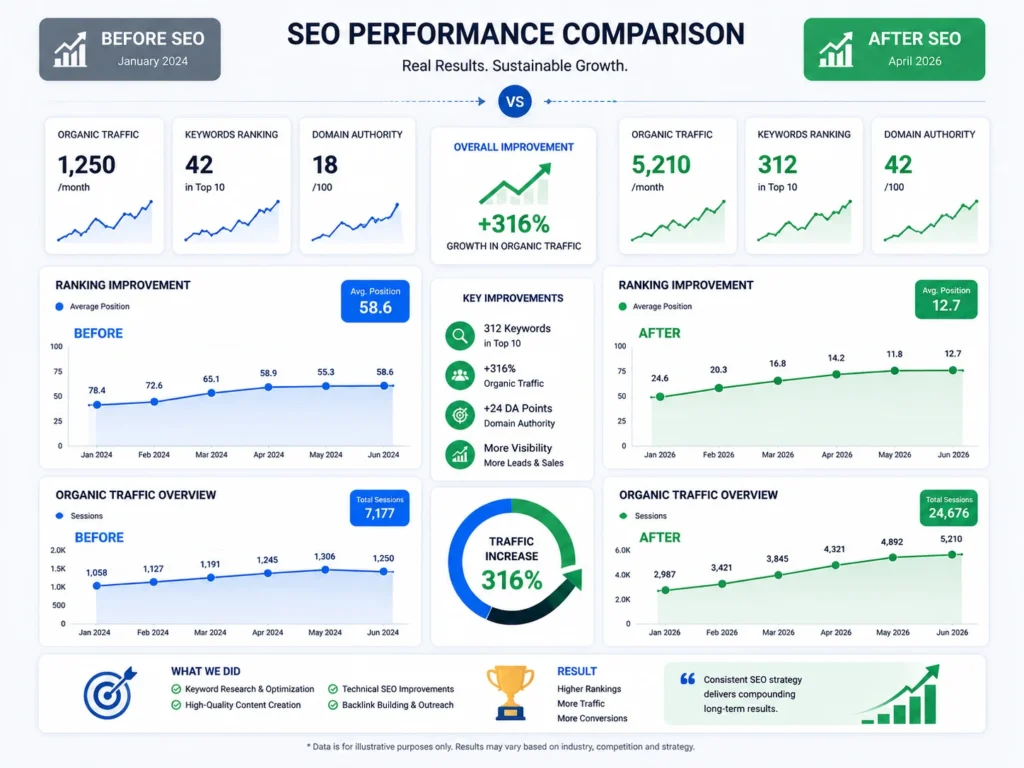
A Texas-based digital marketing agency optimized their blog content using a proper keyword strategy in 2025. Initially, they used only one keyword repeatedly, which resulted in poor rankings. After updating their content with one primary keyword and multiple related keywords, their performance improved significantly. Within 90 days, their organic traffic increased by 180%, and their rankings moved from page 4 to the top 3 results. This shows that a balanced keyword strategy can deliver measurable results
Keyword Strategy for Texas Businesses
If you are targeting local audiences, using location-based keywords is essential. For example, combining your main keyword with phrases like “SEO services Texas” helps attract local traffic. This approach improves visibility in search results and increases the chances of conversion. Local SEO also supports voice search, where users ask questions like “best SEO services near me.” By using a strong keyword strategy, businesses in Texas can compete effectively in their market.
👉 Learn more in our SEO services Texas guide
👉 Check our keyword research strategy article

Common Mistakes to Avoid
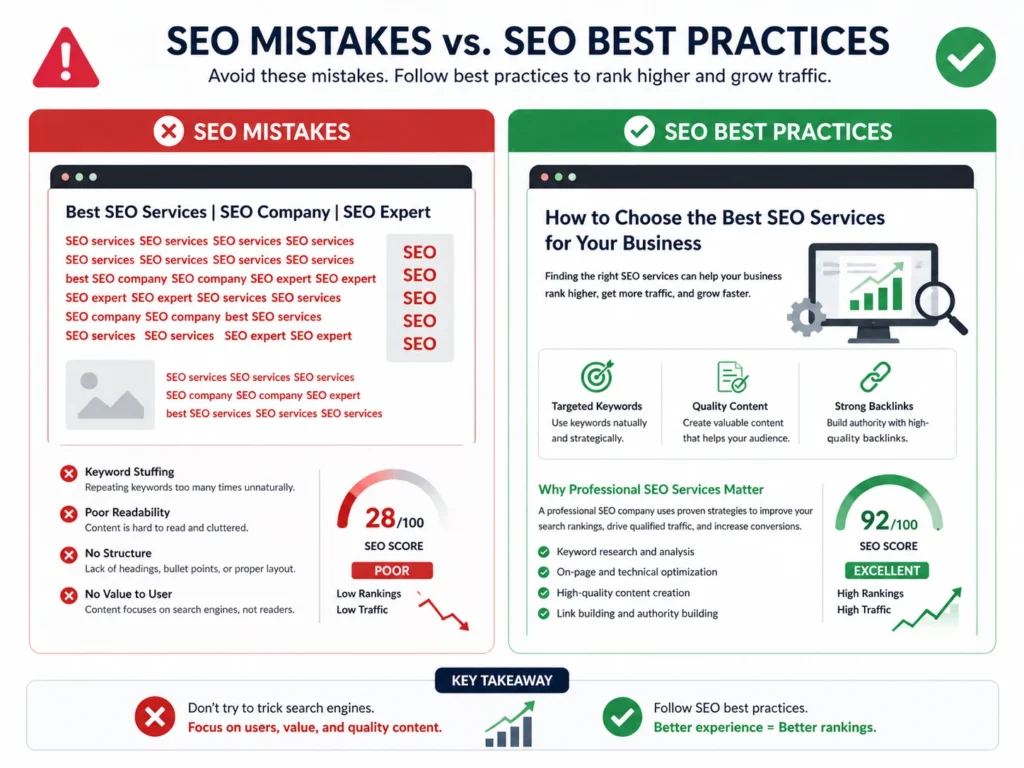
Many website owners make mistakes when trying to optimize their content with keywords. One of the biggest mistakes is keyword stuffing, where the same keyword is repeated excessively. Another mistake is using too many unrelated keywords, which confuses search engines. Ignoring user intent is also a major issue, as it leads to content that does not meet user expectations. Avoiding these mistakes will help you create content that is both user-friendly and SEO-friendly
Expert Tips to Rank Faster

To improve your rankings, you should focus on creating content that provides real value to users. Use keywords naturally within headings, paragraphs, and image alt text. Make your content easy to read by using short paragraphs and clear language. Updating your content regularly ensures that it stays relevant and competitive. By following these expert tips, you can improve your SEO performance and achieve better results in both traditional and AI-driven search engines
Comparison Table
| Factor | Old SEO | Modern SEO 2026 |
| Keyword Usage | Repetition | Natural placement |
| Focus | Density | Intent |
| Content Length | Short | Long-form |
| Ranking Factor | Keywords | Context + UX |
| Search Type | Text | Voice + AI |
People Also Ask
How many keywords should I use for SEO?
You should use one primary keyword along with several related keywords to improve ranking and maintain natural content flow.
Is keyword density still important?
Yes, but it should remain between 0.5% and 1% to avoid over-optimization.
Can I use multiple keywords on one page?
Yes, using multiple related keywords helps you rank for different search queries.
Call to Action
If you want to rank your website in Texas and attract more traffic, start optimizing your content with the right keyword strategy today. Focus on quality, intent, and structure to achieve long-term SEO success.
FAQs
How many keywords should I use in a blog post?
You should use one primary keyword and 10–15 related keywords to create a balanced and effective SEO strategy.
What is the best keyword density for SEO?
The ideal keyword density is between 0.5% and 1% to maintain natural content and avoid penalties.
Are keywords still important in 2026?
Yes, keywords are still important but should be used with a focus on context and user intent.
What are LSI keywords?
LSI keywords are related terms that help search engines understand the context of your content.
How do I choose SEO keywords?
You can use keyword research tools like Google Keyword Planner or SEMrush to find relevant keywords


