How to Become a Digital Marketer (Step-by-Step Guide for Beginners)
Quick Answer (Featured Snippet)
If you want to know how to become a digital marketer, start by learning basic digital marketing skills, choose one area like SEO or social media, practice consistently, build a portfolio, and gain real experience through freelancing or projects.
Table of Contents
Introduction
If you are searching for how to become a digital marketer, you are already thinking in the right direction.
Digital marketing is one of the fastest-growing careers in today’s online world. Every business, whether small or big, now needs online visibility to grow, which is why skilled digital marketers are in high demand.
The best part is that you don’t need a specific degree or expensive education to start. You only need the right skills, consistent practice, and a clear learning path.
In this guide, you will understand step by step how you can enter this field even if you are starting from zero.
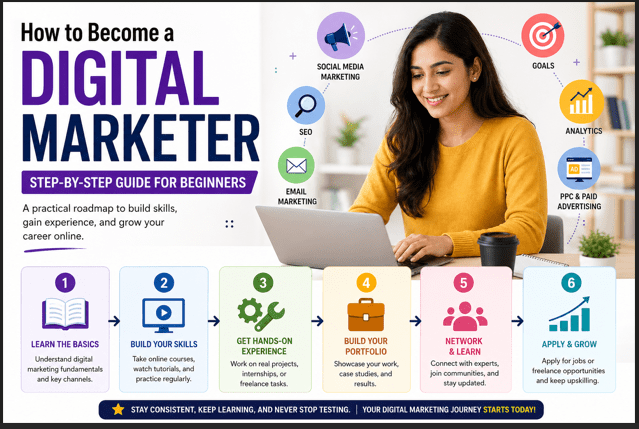
What is Digital Marketing?
Digital marketing simply means promoting products or services using the internet. It helps businesses reach customers through different online platforms.
Main areas include:
- Social media marketing (Facebook, Instagram, TikTok)
- Search engine optimization (SEO)
- Content writing and blogging
- Email marketing
- Paid advertising (Google Ads, Meta Ads)
Each of these areas works together to help a business grow online.
Choose the Right Path in Digital Marketing
Digital marketing is a wide field. You don’t need to learn everything at once. Instead, focus on one area first.
Popular career options:
- Social Media Manager
- SEO Specialist
- Content Writer
- PPC Expert
- Email Marketer
Start small and grow step by step.
Important Step: Know Your Interest Before You Start
Before choosing any career, it is very important to understand your own interest. Many people skip this step and later lose motivation.
Why interest matters:
- If you enjoy the work, you learn faster
- You stay consistent even when things get hard
- You produce better results naturally
Ask yourself:
- Do I enjoy writing or creating content?
- Do I like designing posts or visuals?
- Am I interested in analyzing data?
- Do I enjoy working with social media platforms?
If your heart is not in the work, your output will never be strong. So always choose a path that matches your interest.
Case Study: My Journey from Housewife to Digital Agency Owner
This is where real transformation begins.
I was a housewife, fully dedicated to my home and responsibilities. Like many women, my days were filled with household tasks, family care, and endless duties. In the middle of all this, I used to spend my free time watching drama series just to relax.
But something changed inside me.
I started noticing the growing demand for digital skills everywhere. Businesses were moving online, and opportunities were increasing. Instead of continuing only with passive routines, I decided to shift my energy in a positive direction.

It was not easy.
I had hundreds of responsibilities at home, limited time, and no formal background in digital marketing. But I made one decision: I will stay consistent.
Whenever I had free time, instead of watching dramas, I started learning. I watched tutorials, practiced small skills, and slowly began understanding the digital world.
There were days when I felt tired. There were moments when I thought of quitting. But I kept going.
Slowly, I started taking small projects. Then more confidence built up. I improved my skills step by step. And today, with consistency and patience, I am running my own digital company with a team.
This journey proves one thing very clearly: success does not depend on your starting point; it depends on your consistency and direction.
Learn Core Skills of Digital Marketing
To understand how to become a digital marketer, you need to build strong foundational skills that are used in almost every area.
Key skills include:
1. Content Creation
You must know how to write engaging posts and blogs.
2. SEO Basics
Learn how Google ranks websites using keywords.
3. Social Media Management
Understand platforms like Instagram, Facebook, and LinkedIn.
4. Analytics
Learn how to read performance data and improve results.
5. Communication Skills
This helps you understand clients and audience needs.
Learn Through Practice and Online Resources
You don’t need a degree. You need practice.
Best platforms:
- Google Digital Garage
- HubSpot Academy
- YouTube tutorials
Practice ideas:
- Create Instagram pages
- Write sample posts
- Try small ad campaigns
Build a Strong Portfolio
Your portfolio is your identity in digital marketing.
Include:
- Social media work
- Blog samples
- SEO practice
- Ad examples
Even practice work is valuable.
Freelancing and Real Experience
Start working on real projects as soon as possible.
Platforms:
- Fiverr
- Upwork
Experience matters more than money at the start.
Learn Important Tools
Useful tools:
- Canva (design)
- Google Analytics
- Meta Business Suite
- Google Ads
- SEO tools
Build Your Personal Brand
Share your journey online. Talk about your learning and growth. This builds trust and attracts opportunities.
Keep Improving Yourself
Digital marketing changes fast. Keep learning, practicing, and updating your skills.
Final Thoughts
If you are serious about how to become a digital marketer, remember this is a journey of consistency, not luck.
You don’t need a perfect background. You just need a clear direction and daily effort.
Your story can also change, just like mine did. What matters is starting today and not stopping tomorrow.
FAQ SECTION
How do I become a digital marketer with no experience?
Start by learning one skill, practice daily, and build a portfolio using sample work.
Is digital marketing a good career?
Yes, it offers high demand, remote work, and strong income potential.
How long does it take to learn digital marketing?
You can learn basics in 3–6 months with consistent practice.
Can I learn digital marketing at home?
Yes, you can learn through online platforms and practice from home.
Do I need a degree for digital marketing?
No, skills and experience matter more than a degree.


